When comparing 304 and 316 stainless steel for a gua sha project, separate the material specification from the finished tool. The grade does not establish the tool’s dimensions, surface finish, edge quality, logo durability or product certification. Compare a documented configuration and its sample before confirming an order.
What Is the Material Difference?
Outokumpu describes its 304/4301 grade as an austenitic chromium-nickel stainless steel and its 316/4401 grade as an austenitic chromium-nickel-molybdenum stainless steel. Molybdenum is part of why the latter family is used where greater corrosion resistance is required. These are general material descriptions, not proof of the grade or suitability of a particular finished gua sha tool. See the producer’s Core grade information and Supra grade information.
Compare the Evidence for Each Configuration
| Question | 304 quotation | 316 quotation |
|---|---|---|
| Which material is specified? | Request the exact designation, applicable specification and material record for the selected model. | Request the exact designation and material record; keep 316 and 316L requirements distinct. |
| What will be delivered? | Identify the variant, dimensions, weight, finish and approved sample. | Identify the same configuration details so the comparison is like for like. |
| What use conditions need review? | Provide intended use, cleaning and storage requirements for review. | Provide the same requirements; the grade name alone is not a guarantee for every environment. |
| What does the quote cover? | Separate tool, logo, packaging, sample and delivery conditions. | Compare the same quantity and scope instead of assuming a fixed premium. |
Verify the Grade with Suitable Documentation and Testing
Ask for a material record that can be linked to the selected SKU, variant or production batch. If independent analysis is required, agree the sample identification, test scope and acceptance criteria with a competent testing provider.
A magnet response alone is not a grade certificate. The British Stainless Steel Association explains that processing can change the magnetic response of austenitic stainless steels. Appearance and a simple magnet check therefore should not replace a traceable material assessment.
The method must also answer the question being asked. Thermo Fisher’s comparison of PMI methods notes that XRF can identify elements relevant to 316 but cannot measure the carbon needed to distinguish its L or H variants. Ask the testing provider to confirm the method’s limitations rather than treating any analyzer result as a complete certificate.
Review the Finished Sample Separately
Record the required dimensions, weight, edge condition and surface appearance for the selected configuration. Agree an inspection procedure and acceptance criteria with the supplier. Include the actual logo process and packaging in the sample review; do not infer their quality or durability from the steel grade.
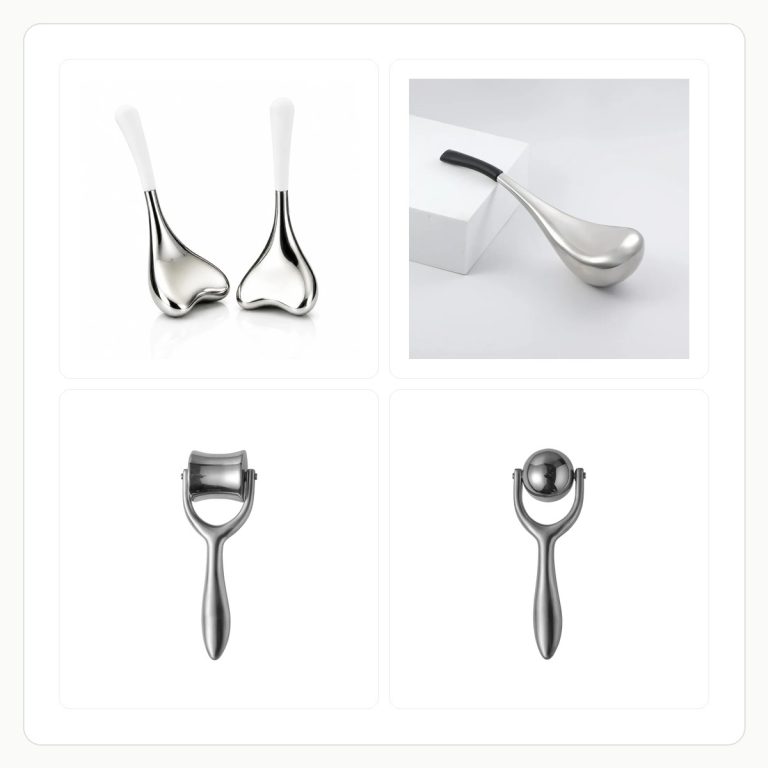
For a product reference, start with the stainless steel gua sha category or the heart-shaped product page. Confirm material availability and specifications for the selected model rather than assuming that every grade or finish is available.
Prepare a Configuration-Specific RFQ
- Product reference and variant, intended use and material requirement.
- Quantity per model and configuration, with the unit clearly stated.
- Logo artwork, proposed location and sample approval requirements.
- Packaging format and quantity, labeling and destination.
- Requested sample, production, inspection and delivery milestones.
Ask for minimum quantities, costs and timing for that scope. A standard-product MOQ does not establish the minimum for every logo or package, and a requested launch date is not an agreed production schedule. The project preparation page provides a starting point for describing the requirements.
FAQ for Stainless Steel Gua Sha Buyers
Is 316 automatically the better choice for a gua sha project?
No single grade label decides the whole product. Compare the documented material, intended conditions, finished sample and quotation scope. Confirm the selected model’s specifications and availability before approving the order.
Can a supplier confirm the grade from shine or a magnet alone?
Those observations do not replace traceable material documentation and suitable analysis. Processing can affect magnetic response, and the test method must be capable of checking the elements or variant required by the specification.
Does this guide confirm that YITHONIA supplies every 304 or 316 configuration?
No. Include your preferred grade and product reference in the inquiry. Availability, material evidence, finish, logo and packaging need confirmation for the selected configuration.
What should a quote request include?
Send the product reference, material requirement, quantity per configuration, logo artwork, packaging and destination. Identify any sample or testing requirements and the milestones you would like reviewed.